Here is the short version, because it is the thing everybody actually wants to know. Afternoon tea is the light spread of sandwiches, scones and cakes taken mid-afternoon. High tea was a hot, substantial meal eaten at the end of a working day. Almost everything sold in Britain today as high tea is, strictly speaking, afternoon tea. Ours included, and we will come back to that honestly further down.
The rest of this is what to expect, what order to eat it in, whether the cream or the jam goes first, and what a good one should cost. It applies anywhere in Kent, not only here.
SettledThe difference, and why the names are backwards
What is afternoon tea?
A light meal taken around four o'clock, built on three things: finger sandwiches, scones with clotted cream and jam, and small cakes. It began in the 1840s as a way of bridging an increasingly long gap between lunch and a fashionably late dinner. It was a social occasion rather than a meal, which is why the portions are dainty.
What was high tea, properly?
Supper. A hot, filling meal eaten at the end of a working day, with meat or fish, bread and butter, and strong tea to wash it down. It belonged to people who had done a day's physical work and needed feeding, not to anybody looking for a cucumber sandwich.
So why does high tea sound grander?
Because the names were never about the food. They refer to the furniture. Afternoon tea was taken sitting in low armchairs around a low table. High tea was eaten at a high dining table, the ordinary sort you would eat any meal at.
Somewhere along the way "high" started sounding like a compliment rather than a description of table height, and the name drifted onto the fancier thing. That is the whole explanation, and it is why you will see hotels advertising high tea while serving something a Victorian mill worker would not have recognised at all.
Which one do you serve?
Afternoon tea, by the strict definition. We sell it as High Tea, because that is what people search for and what they call it when they ring up, and because arguing with a whole country about a word is a losing position. But we would rather tell you plainly than let you arrive expecting a hot supper.
The orderHow to eat it without thinking about it
What order should you eat afternoon tea in?
Bottom to top. Sandwiches first, then anything warm and savoury, then scones, then cake. Savoury to sweet, exactly as you would eat any other meal, and the stand is built in that order from the bottom up.
This trips people up because a tiered stand invites you to start at the top, where the prettiest things are. Start at the top and you will eat cake before sandwiches and the sandwiches will feel like an anticlimax. Nobody will stop you. It is simply built the other way.
Should the scones be warm?
Yes, and this is the single most reliable test of whether a kitchen is baking on the day or buying in. A warm scone is a scone that came out of an oven recently. A cold, dense one has been sitting, and no amount of clotted cream rescues it.
The second test is whether it breaks. A good scone should pull apart in two halves with your thumbs, without a knife. If you need to saw it, something has gone wrong earlier in the day.
Cream first or jam first?
Cream first is the Devon method, jam first the Cornish, and neither county has given an inch in about two hundred years. They taste identical, which everybody involved in the argument knows perfectly well.
The only genuinely practical point is that jam spreads badly on top of cream, whereas cream sits happily on top of jam. So jam first is easier on a warm scone. That is the entire case, and it will convince nobody from Devon.
Judging oneWhat separates a good afternoon tea from an expensive one
What should be on the stand?
Three tiers of actual variety, rather than three tiers of the same idea. Finger sandwiches with more than one filling, something warm and savoury, proper scones, and a cake selection that was made rather than ordered. If two of the three tiers are cake, you are being sold sugar and a nice stand.
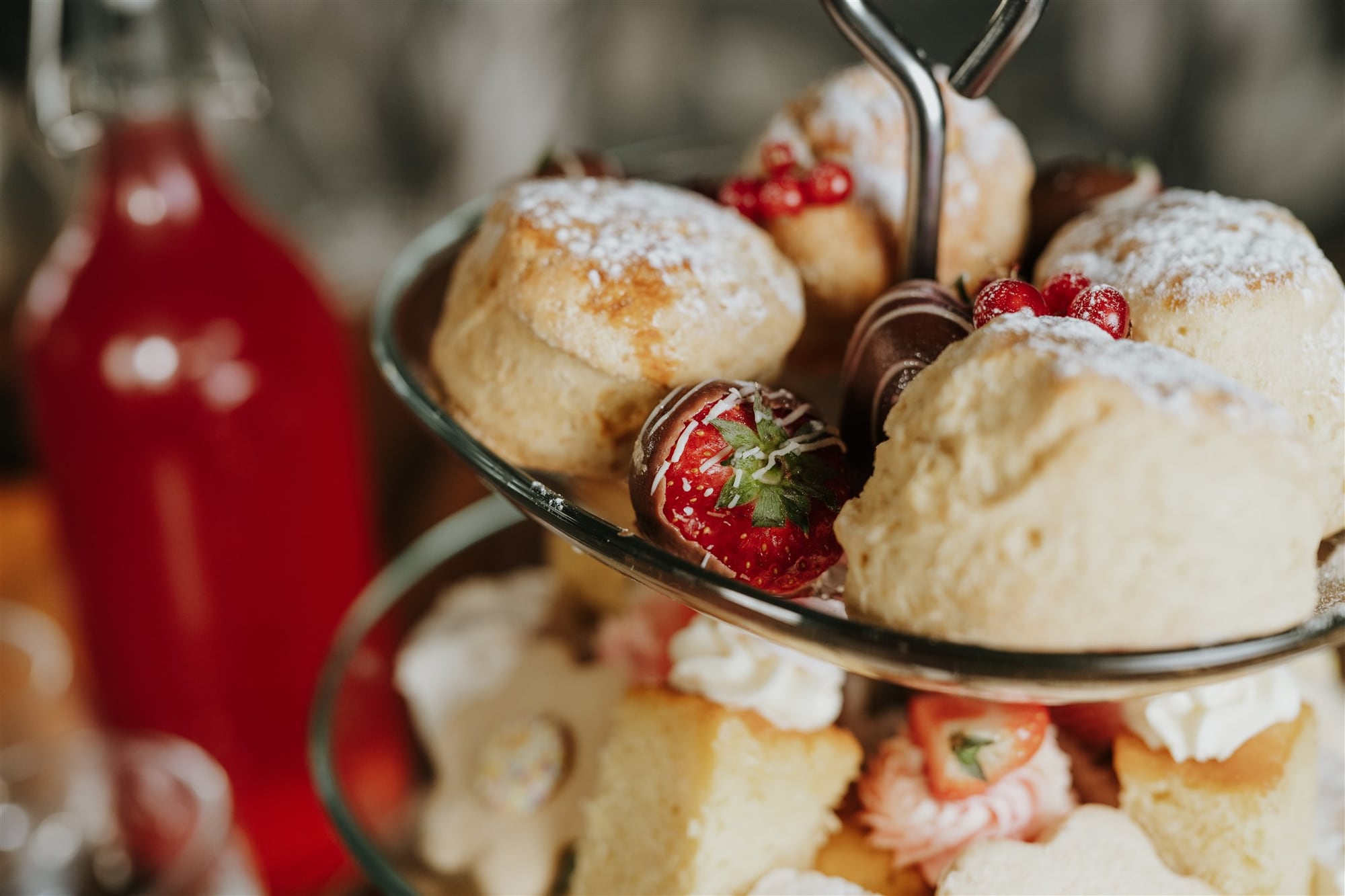
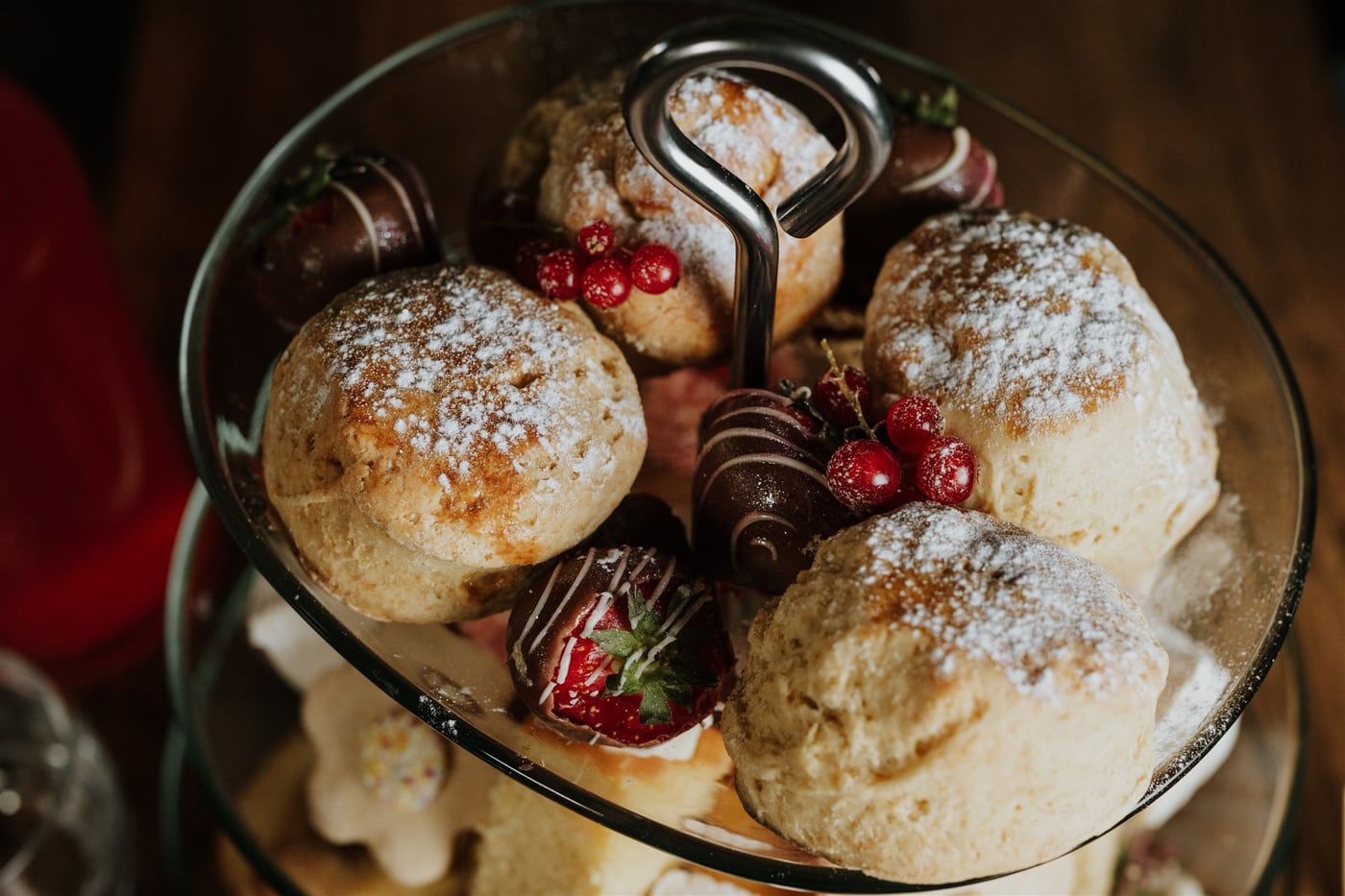
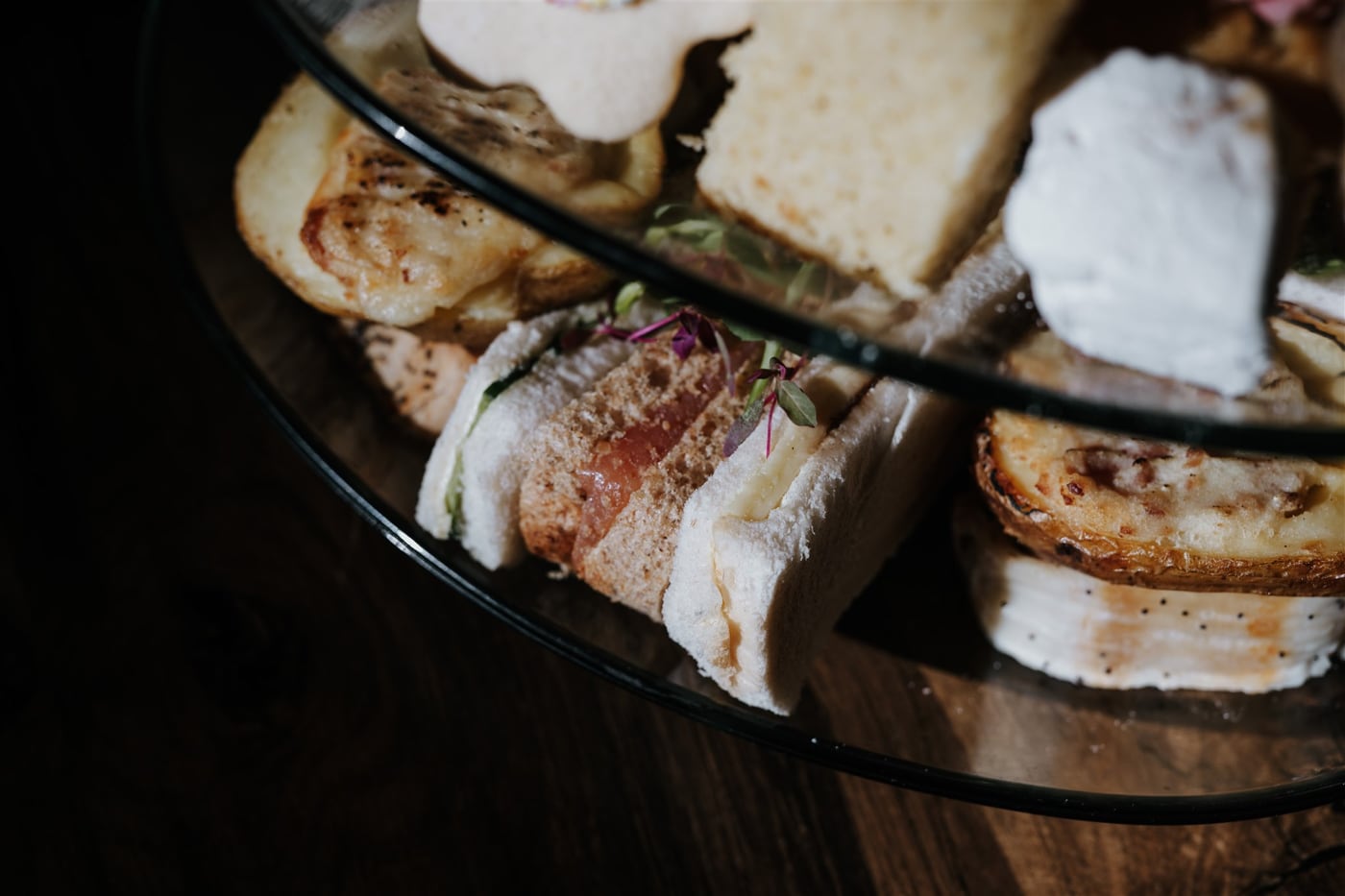
For reference, ours runs to smoked salmon with lime mayo, mature cheddar with apple chutney and traditional cucumber on the sandwich tier; caramelised red onion sausage wellington and baked Black Bomber potato skins for the warm savouries; then fruit and plain scones with clotted cream and jam, a homemade cake selection, chocolate dipped strawberries and homemade marshmallows.
What should afternoon tea cost?
Somewhere around £25 to £40 a head is the normal range outside London, and where a place sits in that band should be explained by what arrives rather than by the postcode. Ours is £30 per person for the Classic, and £36 for the Special, which adds a glass of prosecco or a cocktail to start.
Be a little wary of anything much cheaper, because the maths on baking fresh does not work below a certain point, and equally wary of anything much dearer that cannot tell you what makes it so.
Should tea be included?
Yes, and refills should not be a negotiation. Tea, coffee or something soft should come with it as a matter of course. Ours includes English Breakfast, freshly ground coffee or homemade lemonade with fresh mint.
Practical bitsBooking, groups and dietary needs
Do you have to book?
For any afternoon tea worth eating, yes. Everything is baked on the day rather than held ready, which is the whole point, and that means the kitchen needs to know you are coming. Ours is pre-booking essential with a minimum of two guests.
What about vegetarians and vegans?
Ask when you book rather than on the day, and expect the same standard rather than a plate of what was left over. A vegan afternoon tea is a straightforward thing for a kitchen that plans for it and an awkward one for a kitchen that does not.
Is it good for a group?
It is one of the best things going for a birthday, a hen party or a baby shower, largely because it lasts a couple of hours without anybody having to organise entertainment. For bigger groups a private room can be arranged so the whole afternoon is yours, and room charges may apply.
If you are booking for an occasion, say so. A cake, a bit of fizz and somewhere to put presents make more difference than anything you could add to the stand. Details are on the afternoon tea page.
Can you take it away?
Ours travels in boxes if you would rather eat it somewhere else, which is worth knowing for a picnic or for someone who would rather not be sung to in a restaurant. Mention it when you book.
Where and whenComing here for it
We serve it in The Rooster and The Roost, our oak-beamed restaurant at Upchurch near Sittingbourne, open 9am to 4pm, Wednesday to Sunday, out in the orchards rather than in a hotel lobby. It runs all afternoon rather than at one fixed sitting.
If you are making a day of it, the Sunday roast is the other thing we are known for, and there is a whole year of seasonal dates including a Halloween version of the stand that is considerably better than it sounds.
The short version, once more: it is afternoon tea, whatever the sign says. Eat it from the bottom up, warm scones are the test, and put the jam on first because it is easier. Everything else is preference.
Quick answersCommon questions
What is the difference between afternoon tea and high tea?
Afternoon tea is the light mid-afternoon spread of finger sandwiches, scones and cakes, taken around four o’clock. High tea was historically a hot, substantial meal eaten at the end of a working day, closer to supper than to cake. Almost everything sold in Britain today as high tea is, strictly speaking, afternoon tea.
Why is it called high tea then?
The names refer to the furniture, not the food. Afternoon tea was taken in low armchairs at a low table, and high tea at a high dining table. Over time high tea came to sound grander, so it stuck as a name for the fancier thing, which is the opposite of what it originally meant.
Which one does The BarnYard serve?
Afternoon tea, by the strict definition, sold under the name High Tea. Sandwiches, warm savouries, scones with clotted cream and jam, and a tier of cakes, served all afternoon. The Classic is £30 per person and the Special is £36 per person, which adds a glass of prosecco or a cocktail to start.
Do you put the cream or the jam on the scone first?
Cream first is the Devon way, jam first the Cornish way, and neither county has ever conceded. Both taste the same. Jam first does make the cream easier to spread on a warm scone, which is the only argument either side has that is actually about scones.
What order do you eat afternoon tea in?
Bottom to top, savoury to sweet: sandwiches first, then the warm savouries, then scones, then cake. The stand is built in that order, which is why working downward feels wrong. Nobody will stop you, but the food is designed to be eaten upward.
Do you need to book afternoon tea in advance?
Yes. Pre-booking is essential and the minimum is two guests, because everything is baked fresh on the day rather than held ready.
Can you get a vegetarian or vegan afternoon tea?
Yes, and they are made to the same standard rather than assembled from what is left over. Tell us when you book so the kitchen can prepare properly.
Can you take afternoon tea away?
Yes, we do takeaway boxes. Mention it when you book.
Is afternoon tea good for a birthday or hen party?
It is one of the best things for it, and it is most of what we do. Birthdays, hen parties, baby showers and Mother’s Day are the usual reasons. A private room can be arranged for larger groups, and room charges may apply.
Where do you serve afternoon tea?
In The Rooster and The Roost, our oak-beamed restaurant at Upchurch near Sittingbourne, open 9am to 4pm Wednesday to Sunday.
Written by The BarnYardat Upchurch, Kent
