
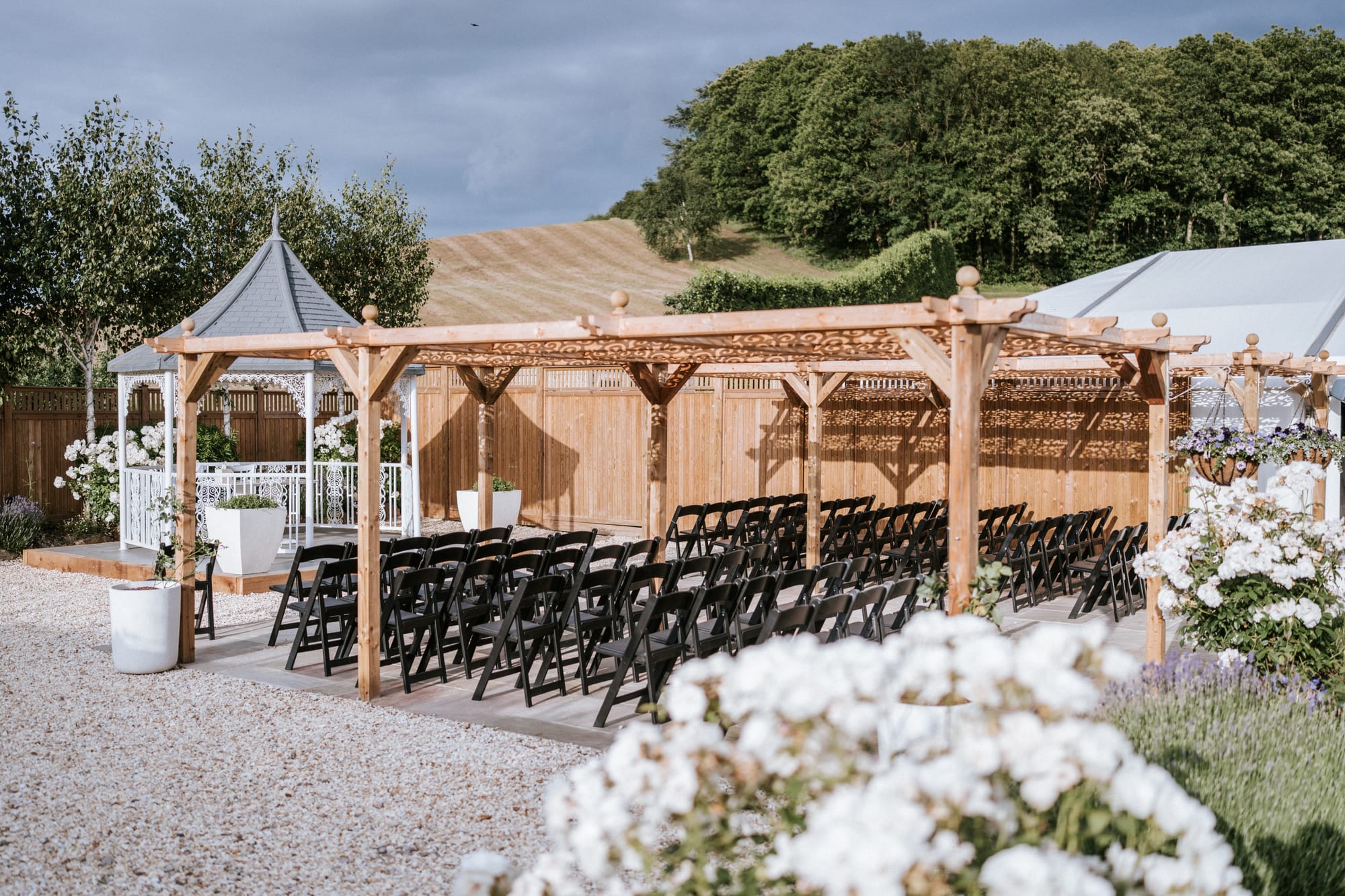
Everybody asks this question and almost nobody gets a straight answer, because most venues have an obvious interest in telling you to hurry. So here is ours, taken from weddings we have actually held rather than from a feeling: the middle of the pack books a little under fifteen months ahead, and about a third of couples book inside a year.
That second figure is the one worth holding on to. Booking within the year is normal, not a scramble. What changes as you get closer is not whether you can get married somewhere lovely, but how much say you have over exactly which day it happens.
This piece covers how far ahead people really book, which months disappear first, what booking late actually costs you, and what to check before you hand over a deposit two years in advance. It is written from our own numbers, and where those numbers are specific to us rather than to Kent generally, that is said plainly.
The straight answerHow far ahead couples actually book
How far in advance should you book a wedding venue?
The median gap between first enquiry and wedding day here is a little under fifteen months. Half of couples book further ahead than that and half book closer in. The normal range, covering the middle half of everybody, runs from roughly ten months to twenty months.
That is the honest average, but averages hide the thing you actually want to know, which is how much the date you have in mind changes the answer. A Saturday in high summer is a different proposition to a Thursday in November, and the sensible lead time for each is completely different.
Is it too late to book for next year?
Almost certainly not. Around a third of the weddings we have held were booked inside twelve months, which makes it an ordinary way to do this rather than a last-minute rescue. Venues talk about booking out because peak Saturdays genuinely do, but a venue is not a single date and the rest of the calendar behaves quite differently.
What narrows is choice. Eighteen months out you can usually have the exact day you want. Ten months out you may be choosing between three or four dates. Six months out you take what is there, and it may well be a Friday.
How early is too early?
Around one in eight of our weddings was booked more than two years ahead, so very early booking is common and it works perfectly well. The reasons are usually good ones: a particular date that matters, a venue somebody has had their heart set on for years, or the simple wish to have the biggest decision settled.
There is no penalty for being organised, but there are questions to ask before paying a deposit that far out, and those are further down this page.
The calendarWhich months go first
Wedding seasonality is far more extreme than most people expect. Across the weddings we have held, the spread across the year looks like this.
Which months are most popular for weddings?
May and August are the twin peaks, each taking around fifteen per cent of the wedding year on their own. July, September, June and April follow at roughly ten to eleven per cent each. Those six months between them account for a little over seven weddings in every ten.
The practical consequence is that competition for dates is concentrated into half the year. If your heart is set on a summer Saturday, you are competing with almost everybody, and eighteen months to two years is realistic. If you are open to April or October, the picture eases considerably.
When is the quietest time to get married?
January and February, and it is not close. Between them they account for under three per cent of the wedding year. November and December are quieter than summer but far from empty, at around six and four per cent respectively.
Quiet does not mean worse. A winter wedding in a barn with the fairy lights on and a fire going is a genuinely lovely thing, and it is a completely different day to a July one rather than a lesser version of it. What it definitely means is more choice of date, more availability among suppliers, and lower prices.
Does the month change the price?
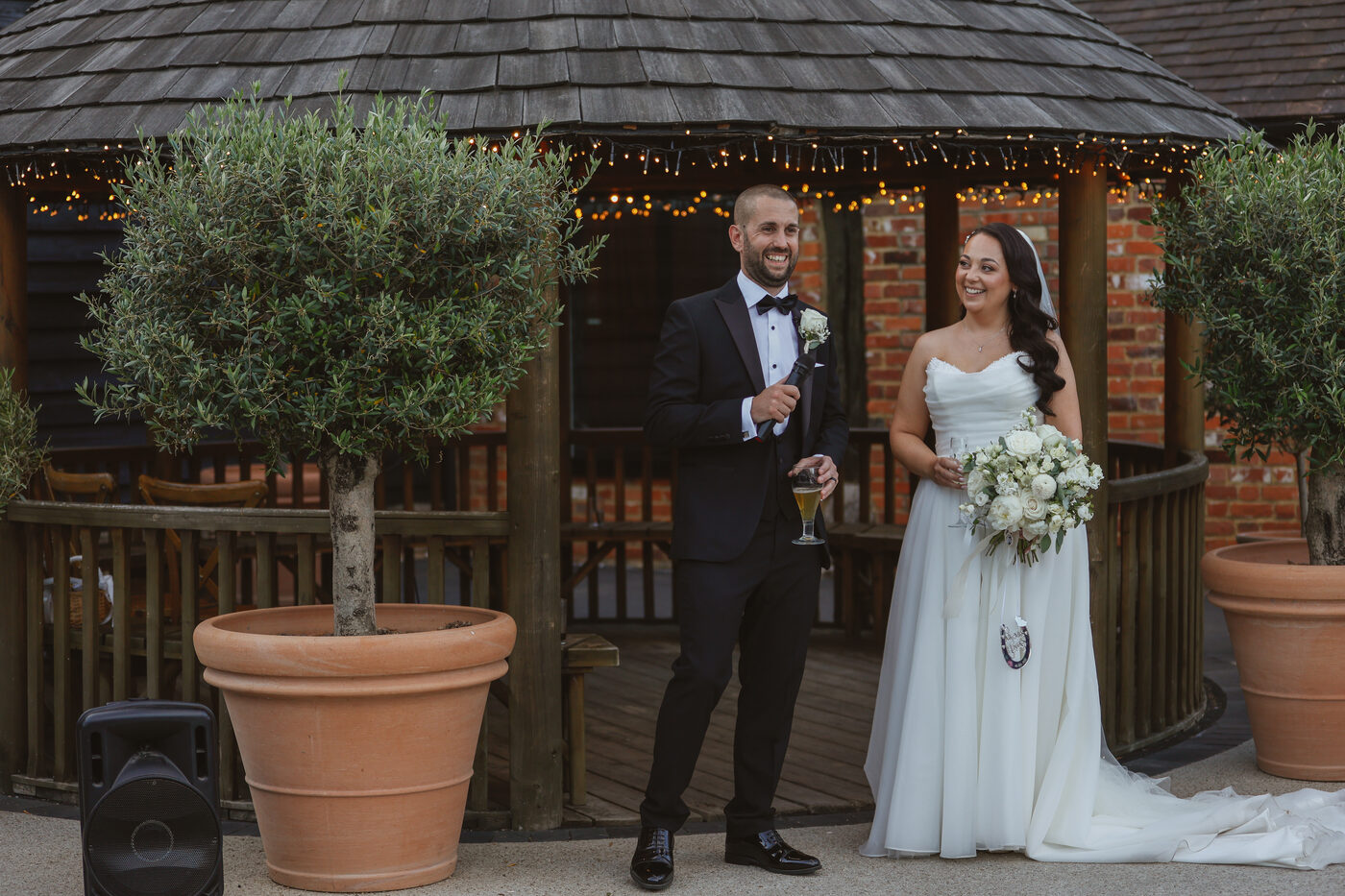
Yes, and by more than most couples realise before they start asking. Saturdays in June, July and August carry the highest prices anywhere, here included. Sunday to Thursday dates and the quieter months are meaningfully lower, and November and midweek winter dates are among the best value we offer.
If your budget is the binding constraint rather than the date, this is the single biggest lever you have, and it is far larger than anything you will save by trimming the flowers. Our full breakdown of what shapes the cost is in a separate article on pricing, and the packages themselves are on the pricing page.
First movesWhat to settle before anything else
Should you pick the date or the venue first?
The venue, in almost every case. This is the single most common mistake we see, and it makes everything harder. Couples fix on a date, tell everybody, and then discover that the three venues they love are all taken on it.
Dates are far easier to move than venues are to replace. A venue you have fallen for will usually be able to offer you several dates within a season, and choosing between four Saturdays is a much better position than hunting for whoever happens to be free on one particular day. Settle the place, then settle the day.
The exception is a date that genuinely cannot move, an anniversary that matters or a family circumstance. If that is you, say so at the very first enquiry rather than at the viewing, because it changes which venues are worth your time.
What about the registrar?
Your ceremony is conducted by a registrar from the Kent Registrars. We book that on your behalf when you book your date, so it is not a second thing to chase, but the registrars charge their fee directly to you and it sits outside anything the venue charges. Budget for it separately.
The part that catches people out is giving formal notice, which is a legal step with its own timescales and has to be done in person at a register office. If your wedding is close, start that early. If it is eighteen months away, there is a window in which it must be done and doing it too early is also a problem, so ask when you book.
How do school holidays affect it?
More than you would think, and in both directions. Summer holiday dates are easier for guests with children and harder for everybody trying to book one, which is part of why August is a peak. They are also the most expensive weeks for anybody travelling and staying over.
A late-August Saturday is the most contested combination in the calendar. If a good proportion of your guest list has school-age children and your budget is tight, the last weekend before term starts and the first weekend after it are worth comparing carefully.
Less than a yearBooking late, and what it costs you
Can you actually plan a wedding in six months?
Yes. About one in sixteen of our weddings was booked inside six months, and they are not noticeably worse weddings. Some of the best have come together quickly, largely because a short timeline forces decisions that a long one lets you agonise over.
Two things have to be true. You need flexibility on the day of the week and ideally the month, and you need to move on the legal notice quickly, because that has a fixed timescale that no amount of goodwill shortens.
What do you lose by booking late?
Choice of date, mainly, and some choice of supplier. Popular photographers and bands are booked a similar distance ahead to venues, so a short timeline means working with whoever is free rather than whoever was top of your list. Our recommended suppliers page is a reasonable starting point when you are working quickly.
What you do not lose is quality. Nothing about a wedding booked in eight months is inherently worse than one booked in twenty-four, and the guests will never know the difference.
What do you gain?
Less time to spend money, which is a genuine advantage rather than a consolation. Long engagements have a way of accumulating extras that nobody would have chosen in a single sitting. You also spend far less of your life in a state of low-level wedding admin.
If you are looking at a short timeline, the dates that remain in any given season are worth asking about directly rather than assuming. We keep those on the late availability page.
More than two yearsBooking early and doing it safely
What are the risks of booking very early?
The honest answer is that plans change. Two years is long enough for jobs to move, for families to grow and occasionally for couples to want a different sort of day entirely. None of that is a reason not to book early, but it is a reason to understand what you are signing.
What should you check before paying a deposit?
Four things, and any venue worth booking will answer all of them without hesitating.
- Is the price fixed at booking? Two years is long enough for prices to move. Ask whether the figure you are quoted is the figure you will pay.
- What happens if the date needs to move? Ask specifically about moving rather than cancelling, because they are usually treated very differently and moving is far more common.
- When are the payments due? A payment schedule spread across two years is much easier than one weighted to the final months.
- What is actually included at this price? Get it in writing at the point of booking, not later. Two years is long enough for everybody to remember a conversation differently.
Our own answers to all of these, along with what is and is not in each package, are set out on the everything explained page.
Season by seasonWhat each part of the year actually gives you
Choosing a month is usually treated as a question of weather and price. It is really a question of what your day looks like, because the same venue is four quite different places across a year.
What is a spring wedding like?
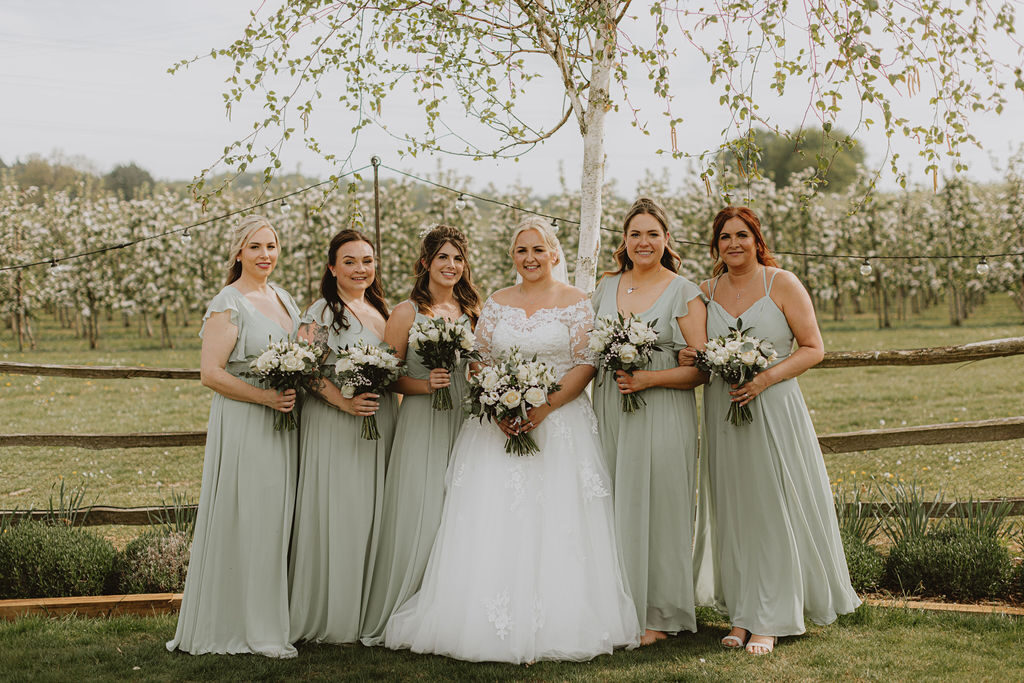
March and April are the fastest-improving months in the calendar and the most underrated. The orchards come into blossom, the gardens have been cut back and are starting again, and the light is clean rather than hazy. Between them these two months take about seventeen per cent of the wedding year, so there is real availability.
The trade is weather risk. An April wedding needs a wet-weather plan you are genuinely happy with rather than one you are quietly hoping not to use. Ask to see the indoor alternative and picture your ceremony actually happening in it.
What is a summer wedding like?
The long evening is what you are buying. In June and July it is still properly light at nine o'clock, which changes the whole back half of the day: drinks outside after the meal, photographs at eight, and the party spilling out of the doors rather than being sealed inside them.
You are also paying the most and competing hardest. May and August alone account for about thirty per cent of our wedding year, and summer Saturdays are the dates that genuinely do disappear eighteen months out. If summer matters more than anything else, book early and be relaxed about which weekend.
What is an autumn wedding like?
September and October are the best-value good weather in the calendar, and September in particular behaves like an extra summer month with slightly shorter evenings. October brings colour into the orchards and a reason to move indoors earlier, which many couples prefer.
Together they take around nineteen per cent of the year, so they are busy but nothing like May or August. If somebody tells you they want a summer wedding on a sensible budget, autumn is very often the answer they actually wanted.
What is a winter wedding like?
Completely different, and worth considering properly rather than treating as the cheap option. It is dark by four, so the day is built around light and fire rather than gardens: candles, fairy lights, a long meal, everybody inside together. It is intimate in a way a summer wedding is not.
November and December take about ten per cent of the year between them, and January and February under three per cent. That means near-complete freedom of date, and prices meaningfully below anything in summer. What you must satisfy yourself about is heating, because a barn in February is a serious question and any venue should be able to answer it without vagueness.
The order of thingsWhat to book, and when
Once the venue is settled, most of the panic in wedding planning comes from doing things in the wrong order. This is the sequence that causes the fewest problems.
What should you book straight after the venue?
The photographer, and it is not close. Good photographers book as far ahead as venues do, sometimes further, and unlike almost everything else there is no substitute if the one you wanted is taken. If you have a photographer in mind, contact them the same week you confirm your date.
After that, in rough order: any band or DJ, the dress, and the registrar formalities. Flowers, cake, transport and stationery can all wait comfortably. None of them will be unavailable at six months out, and several will be cheaper for having been decided later.
When should you send save-the-dates?
As soon as the venue is confirmed, if the wedding is more than a year out, and particularly if guests will need to travel or stay over. A save-the-date costs almost nothing and it removes the single most common piece of guest friction, which is somebody discovering the date after they have booked a holiday.
Formal invitations are a separate exercise and belong around three months out. If people are travelling, tell them early where to stay: our list of local hotels and taxi companies exists for exactly that conversation.
How long before the day do numbers get fixed?
Final numbers are usually confirmed a few weeks beforehand, and that is the point at which the cost stops moving. Before that, everything is an estimate, which is why it is worth being realistic rather than optimistic about your guest list early on. Almost every couple invites more people than eventually come, and building your budget on the invitation list rather than a realistic acceptance rate is how people end up surprised.
Practical stepsWhat to do this week
What should you do first?
Work out three things before you contact anybody: roughly how many people you want, roughly what you can spend in total, and which season you would prefer. Those three answers narrow the field faster than anything else, and without them every venue conversation goes round in circles.
Guest numbers matter most, because they rule venues in and out absolutely. A venue that seats 200 and one that seats 60 are not the same decision with a different price on it.
How many venues should you see?
Three is usually plenty. Beyond five, most couples find the choice gets harder rather than easier, and details start blurring between places. See them in person, and if you can, at roughly the time of day your wedding would actually happen. A barn at eleven on a bright morning tells you very little about how it feels at eight in the evening with two hundred people in it.
If you would rather see somewhere with no appointment and no pressure, open days are the low-commitment way to do it, and ours are listed on the open days page.
How it works hereBooking with us
What are the packages?
Four. Traditional is the full day in the Arboretum glass pavilion, all-inclusive, from £6,750 for a Sunday to Thursday. Twilight is a later ceremony and evening party in the Apple Barn, with venue hire from £3,450 and an in-house DJ included. Intimate covers up to 30 guests with five hours of exclusive use of the Apple Barn and Courtyard, from £5,000. Signature is full private hire of the entire venue, priced on request.
Capacities are 200 seated in the Arboretum, rising to 300 with evening guests, and up to 180 in the Apple Barn. The civil ceremony licence covers up to 200. The weddings section goes through each package properly.
What happens when you enquire?
We will tell you what is actually available in the season you are asking about rather than pushing you toward one date. If you are working to a tight budget, say so at the start, because the honest answer is often a different month rather than a smaller version of the same day.
Whatever stage you are at, the useful next step is the same. Come and stand in the room. An hour on site will tell you more than a fortnight of scrolling, and it is the only way to know whether a place feels right. You can book a viewing here, or ring 01634 235059 and ask us anything first.
Quick answersCommon questions
How far in advance should you book a wedding venue?
The median booking at The BarnYard is made a little under fifteen months before the wedding. Most couples land somewhere between ten months and twenty months ahead. If you want a specific Saturday in high summer, work to the longer end of that; for a midweek or winter date, considerably less notice is usually fine.
Is it too late to book a wedding venue for next year?
Usually not. Around a third of the weddings we have held were booked inside twelve months, so booking within the year is normal rather than exceptional. What narrows is choice of date, not availability altogether.
Can you plan a wedding in six months?
Yes, and about one in sixteen of our weddings was booked inside six months. It is entirely doable, but you should be flexible about the day of the week and the month, and you should give notice to the register office early, since that has its own legal timescales.
Which months are most popular for weddings?
May and August are the two clear peaks, each taking around fifteen per cent of our wedding year, followed by July, September, June and April at roughly ten to eleven per cent each. Those six months account for a little over seven in ten weddings.
When is the quietest time to get married?
January and February by a wide margin, together making up under three per cent of the wedding year. December and November are quieter than the summer but livelier than deep winter. Quiet months mean far more choice of date and meaningfully lower prices.
Does the time of year change the price of a wedding?
Yes, significantly. Saturdays in June, July and August carry the highest prices, while Sunday to Thursday dates and the quieter months are lower. November and midweek winter dates offer some of the best value we have.
Should you book the venue or set the date first?
The venue, in almost every case. Dates are far easier to move than venues are to replace, and a venue you have fallen for will usually offer you several dates. Fixing an exact date first and then hunting for somewhere available on it is the harder way round.
How long does the registrar take to book?
Your ceremony is conducted by a registrar from the Kent Registrars, and we book it on your behalf when you book your date with us. The registrars charge their fee directly to you, separately from anything The BarnYard charges. Giving formal notice has its own legal timescales, so start it early if your wedding is close.
What is the risk of booking a venue two years ahead?
Mainly that your plans change. Around one in eight of our weddings was booked more than two years out, so it is common and it works. Before paying a deposit, check what happens if you need to move the date, whether prices are fixed at the point of booking, and what the cancellation terms are.
How many wedding venues should you view before booking?
Three is usually enough, and more than five tends to muddy rather than clarify. See them in person, ideally at roughly the time of day your wedding would happen, because a barn at eleven in the morning tells you very little about how it feels at eight at night.
Written by The BarnYardat Upchurch, Kent
