
If you are reading this, you are probably organising something you never wanted to organise, in a week that has already asked a great deal of you. This is meant to make one part of it easier. It is the practical shape of a wake, written plainly, so that you can make a handful of decisions quickly and then stop thinking about them.
None of what follows is a rule. There is no correct way to do this and nobody is marking it. What there is, after a good many of these, is a set of things that tend to work and a set of questions that tend to come up at the wrong moment. Knowing them in advance takes a little of the weight out of the arranging.
First thingsWhat the afternoon is actually for
Do you have to hold a wake at all?
No. There is no obligation, and choosing not to says nothing whatsoever about how much somebody was loved. Some families find the gathering afterwards is the part that helps most, and some would far rather go home, close the door and be quiet. Both are entirely reasonable.
If you are undecided, the question worth asking is not what is expected of you. It is whether the people who are travelling will need somewhere to go afterwards, because a funeral that ends in a car park at half past two can leave people with nowhere to put the rest of the day.
Is it a wake, a reception or a celebration of life?
They mean much the same thing and you may use whichever feels right. "Wake" is the oldest and still the most common in conversation. "Celebration of life" tends to be chosen when the tone is intended to be warmer, or when the person who died asked for something less formal. "Reception" is simply the neutral word.
The word matters less than the shape. What people mean by all three is a room, some food, and a few hours in which everybody who came can talk to one another before going home.
The shape of itHow long, how many, and when
How long should a wake last?
Two to three hours is the usual span, and it tends to organise itself. People arrive more or less together, the room is at its fullest for the first hour, and after that it thins steadily as those who travelled furthest begin to leave. By the third hour it is usually close family and a few old friends.
The practical advice is to book the room for longer than you think you need rather than for a fixed slot. Nothing is worse on that particular afternoon than being asked to move on while people are still talking. If a venue offers you the space for the day, take it.
How many people usually come?
Fewer than came to the service, almost always, and it is genuinely difficult to predict. Between half and two thirds of the funeral attendance is a reasonable working figure. Some will have come a long way and need to start back, and some will feel they have paid their respects and would rather not intrude on the family.
Two things follow from that. Choose a room that will still feel right if the lower number turns up, because a half-empty hall is dispiriting in a way that a slightly full one never is. And ask whether final numbers can be confirmed a day or two beforehand, because you will have a much better idea by then than you do now.
How soon after the funeral should it be?
Immediately afterwards, in almost every case. Everybody has already travelled, taken the day off and dressed for it, and asking them to come back on another date means a good many simply will not manage it. Allow around half an hour between the end of the service and the first arrivals, which is usually enough for people to leave the crematorium or church and find their way over.
Tell the venue what time the service starts rather than what time you expect to arrive. Services overrun, and a venue that knows the actual start time can absorb that without anybody having to make a phone call from the car.
Food and drinkWhat to put on, and what not to bother with
What food do you serve at a wake?
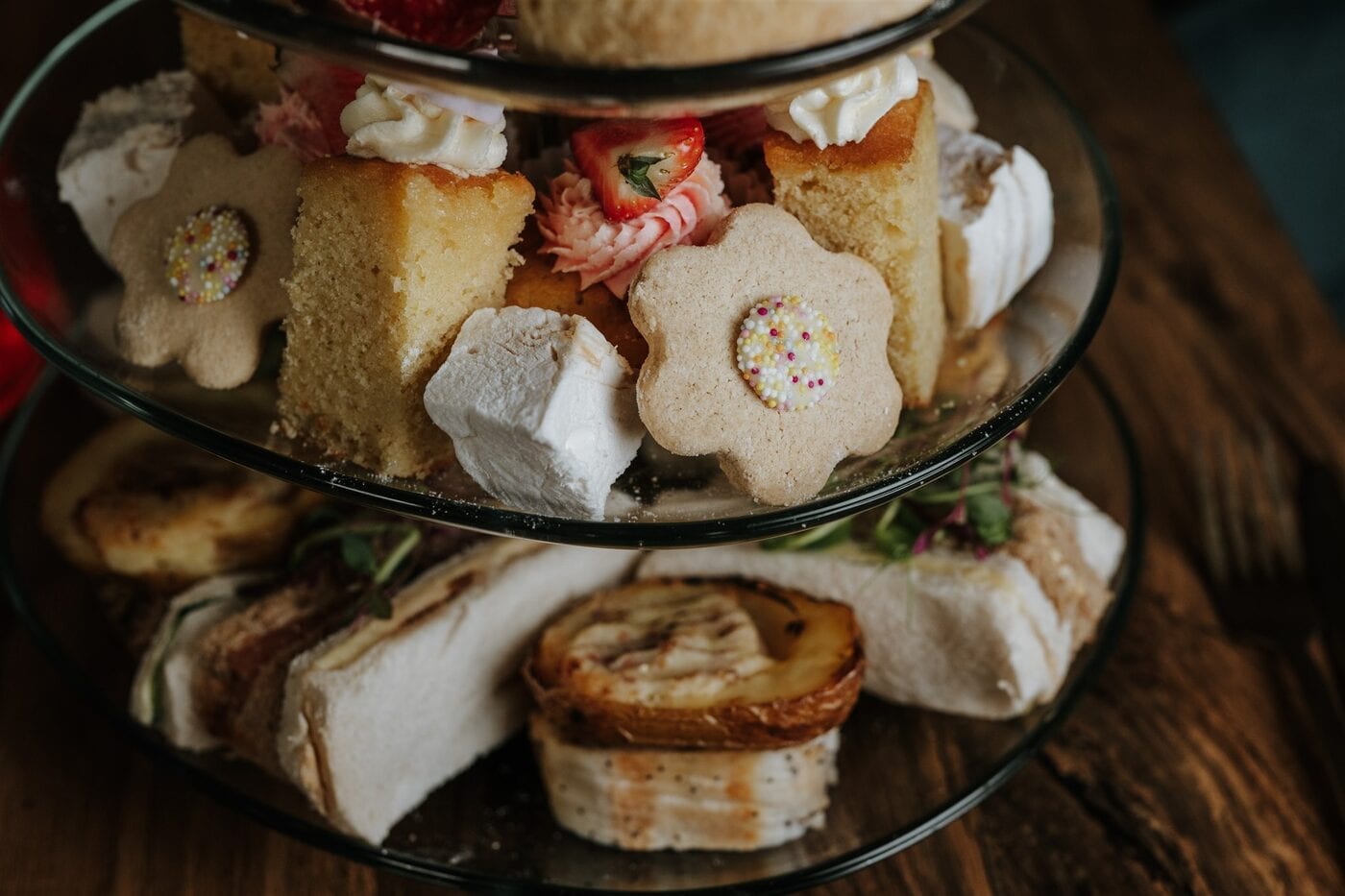
Something people can eat standing up while holding a cup of tea. Sandwiches, a few warm savouries, cake, and tea and coffee that keeps coming. That combination has persisted for a century because it works, and because it lets people eat a little without committing to a meal.
Quantity matters less than you think. People eat noticeably less than usual at a wake, and a table that looks generous is doing most of the job. What people do drink, in significant quantity, is tea.
Do you need a sit-down meal?
Rarely, and it can work against you. A seated meal fixes everybody in one chair next to the same two people for an hour and a half, which is the opposite of what most people need. The whole value of the afternoon is being able to move about, find the person you wanted to speak to, and leave a conversation when it has run its course.
The exception is a small family gathering, twenty people or fewer, where sitting down together is precisely the point. If that is what you are having, a proper meal is lovely and worth doing well.
Should there be a bar?
Usually yes, and usually a quiet one. Some people want a drink and some very much do not, and both should be easy without anybody having to make an announcement about it. A bar that is simply open, with tea and soft drinks equally available, handles this without any awkwardness.
One practical note that catches families out. Many venues, including this one, do not permit drinks brought from outside, so if there was a particular bottle that mattered to the person who died, ask in advance rather than arriving with it. It can almost always be arranged if there is notice.
The small thingsDetails that turn out to matter
Should there be photographs?
Photographs are the single thing families are most glad they did. A few framed pictures on a table, or a slideshow running quietly on a screen, gives people something to gather around and something to talk about, which is exactly what a room full of people who half know each other needs.
It does not need to be elaborate. A dozen photographs spanning a life will hold a room for an afternoon. If you are putting a slideshow together, keep it silent or very quietly scored, because music with a slideshow tends to stop conversation rather than support it.
Should there be speeches?
Only if somebody actively wants to give one. There is no obligation, and plenty of good wakes have none at all. Whatever was going to be said formally has usually been said at the service.
If there are speeches, three things help. Hold them early, while the room is still full. Keep them short. And let people know roughly when they will happen, so nobody is caught halfway through a conversation or outside on the phone.
What about music?
Quiet background music helps more than silence does, because a silent room makes everybody talk in a hush and the hush becomes its own weight. Something low and unobtrusive gives people permission to speak normally. If there was music the person loved, this is a gentler place for it than the service.
Should children come?
That is a family decision and there is no wrong answer. What is worth knowing is that children generally cope with these afternoons rather better than adults expect, and that their presence often lightens a room in a way nobody plans for.
If they are coming, the thing that helps most is somewhere they can move about, step outside and be a little noisy without anybody minding. A venue with a garden or a courtyard solves this without anybody having to manage it.
The other optionDoing it at home instead
Plenty of families hold the wake at somebody's house, and for the right gathering it is the warmest possible version of the afternoon. It is worth thinking about properly rather than dismissing it, and worth being honest about where it gets hard.
Should you just do it at home?
If the numbers are small, the house is big enough, and somebody other than the immediate family is willing to run the kitchen, then yes, and it will probably be lovely. Home has an intimacy that no venue can manufacture, and for a quiet gathering of fifteen or twenty people it is frequently the better answer.
What makes a home wake hard?
Three things, and they are all practical rather than emotional. Parking is the first, because thirty cars on a residential street is a genuine problem and one that visitors will feel awkward about. Capacity is the second, since a house that holds twelve comfortably holds twenty-five very badly, and people end up standing in a hallway.
The third is the one families most regret. Somebody has to make the tea, refill the plates, answer the door and then clear up afterwards, and that somebody is usually the person who least ought to be doing it. If you hold it at home, arrange in advance for a friend or a cousin to take charge of the kitchen entirely, and mean it. The bereaved should not be washing up at seven o'clock.
What if the house is the right answer but the numbers are not?
A reasonable middle path is a short gathering somewhere else immediately after the service, for everybody who came, followed by close family going back to the house afterwards. That gives the wider circle somewhere to go and pay their respects, and gives the family the quieter evening that is often what they actually want.
It also solves the awkwardness of a house that is full of people until nine when everybody is exhausted. There is no rudeness in an afternoon that ends at four.
The awkward oneWhat it costs and who pays
People are often embarrassed to ask about money in the same conversation as a funeral, which is a shame, because it is a perfectly ordinary question and it is much easier answered early than discovered late.
How is a wake usually charged?
Nearly always per head for the food, with the room either included or charged separately depending on the venue. That means the cost moves with your numbers, which is why the guessing described earlier matters financially as well as practically. Ask what happens if fewer people come than you booked for, because policies vary and some venues will adjust on the day while others will not.
Drinks are usually handled one of two ways. Either a bar where people buy their own, or a tab that the family sets a limit on in advance. A limited tab is the option most families are happiest with afterwards, because it is generous without being open-ended.
Who normally pays for it?
Most often the estate, alongside the funeral costs, though in practice it is frequently one or two family members who settle it and sort it out between themselves later. If money is tight, say so plainly when you enquire. Any venue that has done this often will have a simpler option, and there is no shame in a smaller room and a good spread of sandwiches.
People travellingThose coming from a distance
What about people who have to travel?
Funerals gather people who have not been in the same county for years, and a proportion of them will be driving a long way or coming by train. Two small pieces of planning make a real difference to whether they can stay for the wake rather than turning straight round.
The first is telling people where the wake is when you tell them about the service, not afterwards. Somebody deciding whether to book a hotel needs that information a fortnight ahead, not on the day. The second is knowing what is nearby, so that anybody who asks gets an answer rather than a shrug. We keep a list of local hotels and taxi firms which was put together for wedding guests but is just as useful here.
What if people want to drink and cannot drive?
This comes up more than you would expect, particularly with older relatives who have travelled and would like a proper drink and a proper conversation. Having a couple of local taxi numbers written on a card by the bar removes a small stress from the end of the afternoon, and it costs nothing to do.
A very small gatheringWhen it is only close family
What if there are only a dozen of us?
Then almost everything above changes, and for the better. A small group can sit down together properly, eat a real meal and talk without the constant movement of a larger room. This is one of the few occasions where a seated lunch is the right answer rather than the wrong one.
For something that size, a table in the restaurant or the private Mezzanine above it, which seats up to 24, is often more comfortable than a function room that would feel cavernous with fifteen people in it. It also feels more like an ordinary family lunch, which is frequently what people want and rarely what they think to ask for.
The one thing to check is the day. Our restaurant is open Wednesday to Sunday, so if the funeral falls on a Monday or Tuesday, a room booking is the route rather than a restaurant table.
AfterwardsThe week that follows
What happens to the flowers and the photographs?
Ask the venue to put everything together in one place at the end rather than collecting it as you go. On the day itself nobody is thinking about the picture frames, and it is very easy to leave something behind that you would be upset to lose. A good venue will do this without being asked and hold anything forgotten until somebody can come back for it.
Flowers from the service often come on to the wake, and there are usually more than any one house can hold. Many families send them on to a local care home or hospice the following day, which is a small kindness at a point when small kindnesses are useful.
What about the food nobody ate?
There is almost always some, because people eat less than anybody plans for. Ask in advance whether you can take it away, and bring a box, because a decision made at four in the afternoon on that particular day is a decision nobody wants to be making.
Do you need to thank people?
Not formally, and not quickly. A short note to anybody who travelled a long way or who did something practical is more than enough, and there is no timetable on it. Most people understand entirely if it arrives a month later, or not at all.
Choosing somewhereWhat to ask a venue
You are likely to be making this decision quickly and without much time to compare. These five questions will tell you most of what you need to know, and a venue that has done this often will answer all of them without hesitating.
- Is the room ours alone? A wake in a corner of a working pub is a different afternoon to a wake in a room that belongs to you for the day. Both can be fine. It is worth knowing which you are booking.
- Is there somewhere quiet to step away to? Very few gatherings pass without somebody needing ten minutes on their own. A second room, a garden, even a bench outside makes a real difference.
- What happens if the service overruns? Services do overrun. The answer you want is that it does not matter and the room is yours regardless.
- When do you need final numbers? The later the better. A day or two beforehand is reasonable and a fortnight is not.
- Is there step-free access, and where are the nearest facilities? Funerals bring together the oldest people in a family. This question matters more here than at any other kind of gathering.
Does it need to be near the crematorium?
Near enough that people will actually make the journey, which in practice means within about twenty minutes. Beyond that you begin to lose people, particularly the elderly and anybody who did not drive themselves. Parking matters just as much as distance, because a venue with difficult parking will quietly shed a proportion of the people you wanted there.
If you are considering hereWhat we can do
This section is brief and factual, because you have enough to read today.
What are the spaces?
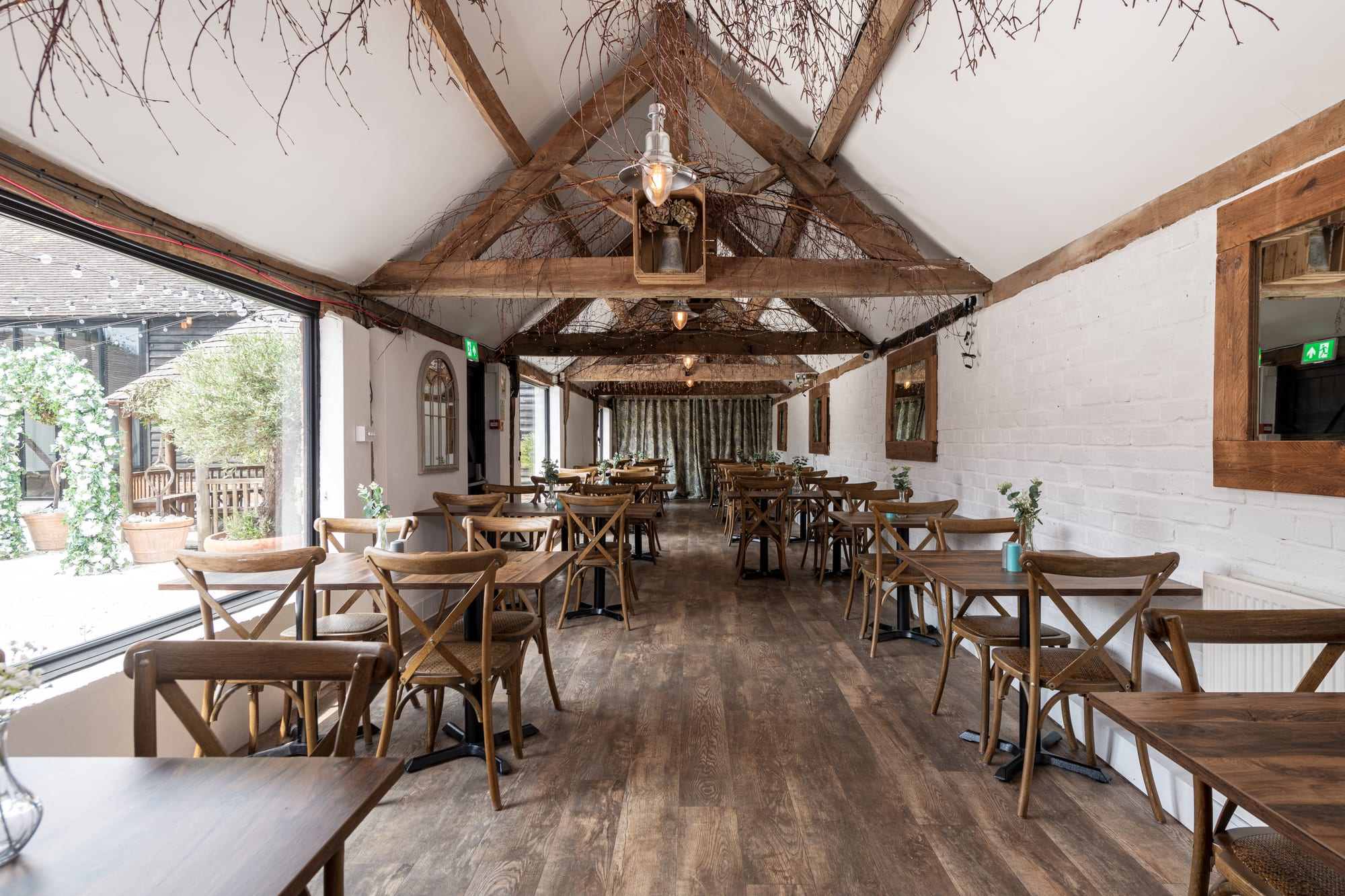
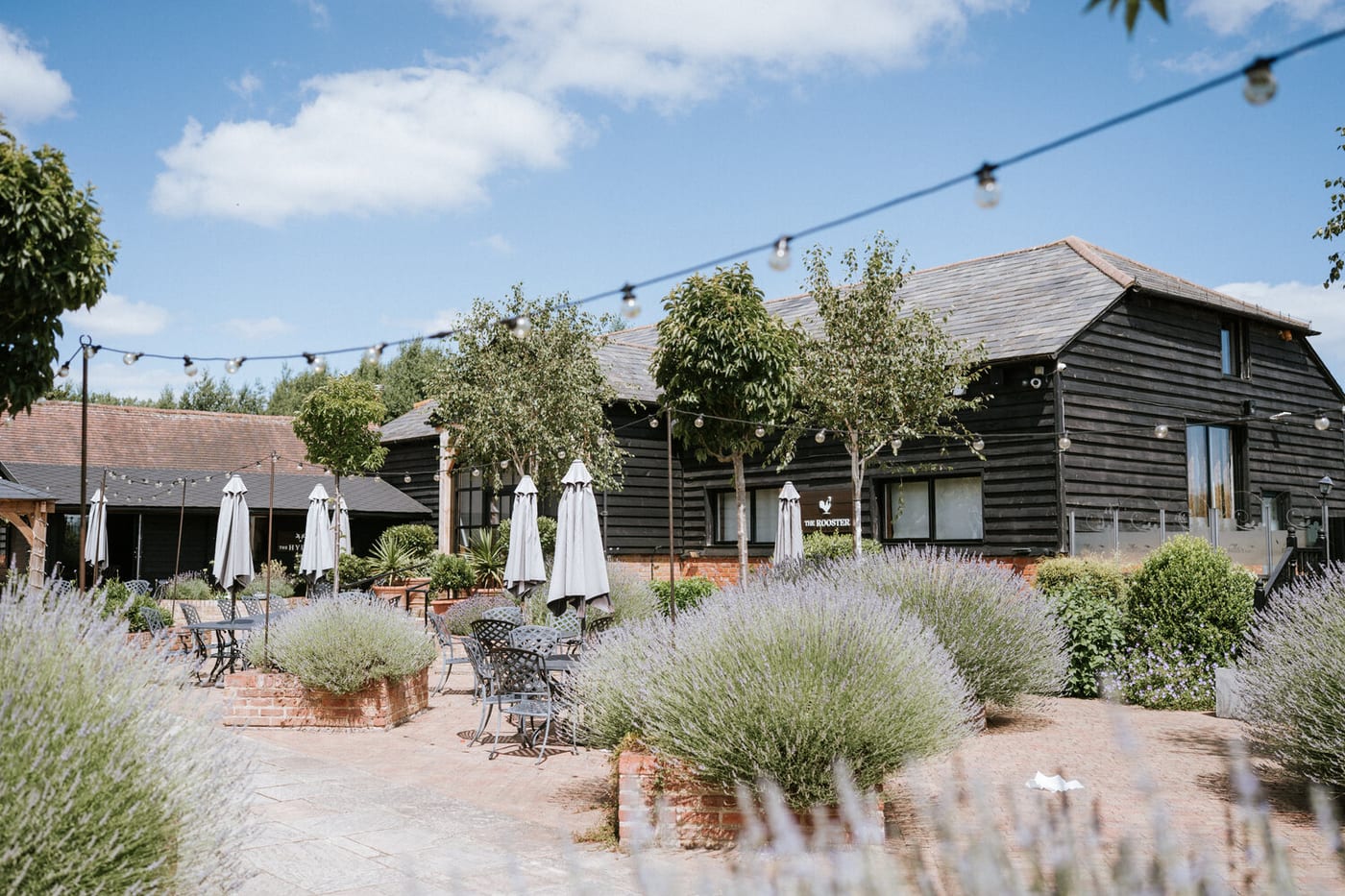
The Roost holds up to 50 people and is the one most families choose. The Apple Barn with its Courtyard holds up to 180 and suits a larger gathering. Whichever you take is your family's alone for the day, not a partitioned corner of something else. There is free parking on site, and step-free access to The Roost and the restaurant.
We are at Upchurch, near Sittingbourne, in 150 acres of orchard, which means there is somewhere to walk and somewhere to sit outside if the day allows it. Full details are on the wakes and celebrations of life page, and you can see what The Roost actually looks like before you visit.
What is handled for you?
The room, the catering, the timings and the setting up. One person looks after it from the first phone call, so you are not repeating yourself to different people in a week when repeating yourself is exhausting. Photographs, an order of service on the tables, flowers or a playlist are all straightforward to arrange if you want them.
On notice: less than people assume, and we will always try. Funerals rarely come with much warning, and we would far rather you rang and asked than decided it was too short notice.
If you take nothing elseThe short version
Book the room for longer than you think you need. Expect between half and two thirds of the funeral. Sandwiches, cake and a great deal of tea. Photographs on a table. Speeches only if somebody wants to give one, and early if so. Somewhere quiet to step outside.
And whatever you decide, it will be enough. The people who come are not assessing the arrangements. They came because somebody mattered to them, and being in a room together for a couple of hours afterwards is the entire point of the exercise.
If you would like to talk any of this through, the number is 01634 235059 and there is no obligation attached to a phone call. Practical details like parking, access and directions are all set out on the everything explained page, and other kinds of gathering are covered under events.
Quick answersCommon questions
How long should a wake last?
Most run for two to three hours. People tend to arrive together after the service, stay for an hour or so, and then leave in ones and twos. Booking a room for the whole afternoon rather than a fixed slot means nobody has to be moved on while they are still talking.
Do you have to hold a wake at all?
No. There is no obligation and no correct answer. Some families find the gathering afterwards is the part that helps most, and others would rather go home quietly. Both are reasonable, and neither says anything about how much someone was loved.
What food do you serve at a wake?
Something people can eat standing up and holding a cup of tea. Sandwiches, warm savouries, cake and good tea and coffee cover it. A sit-down meal works better for a small family group than a large gathering, because seated meals fix people in one place and a wake works best when people can move about and talk to one another.
How many people usually come to a wake?
Almost always fewer than came to the service, and it is very hard to predict. A reasonable rule is to expect between half and two thirds of the funeral attendance, and to choose a room that will not feel empty if fewer come. Ask a venue whether numbers can be confirmed a day or two beforehand.
Should there be speeches at a celebration of life?
Only if somebody wants to give one. If there are speeches, keep them early, keep them short, and let people know roughly when they will happen so nobody is caught mid-conversation. It is also perfectly fine for there to be none at all.
Should children come to a wake?
That is entirely a family decision, and children often cope with these days better than adults expect. If they are coming, somewhere they can move about, go outside and be a bit noisy without anybody minding makes a real difference to how the afternoon goes.
How soon after the funeral should the wake be?
Immediately afterwards, in almost every case. People have already travelled and taken the day off, and asking them to return on another date means far fewer will manage it. Allow around thirty minutes between the end of the service and the first arrivals.
What should you ask a venue about a wake?
Whether the room is yours alone for the day, whether there is somewhere quiet to step away to, how the timings work if the service overruns, whether final numbers can be confirmed late, and how much notice they need. A venue that has done this often will answer all five without hesitating.
How much notice does The BarnYard need for a wake?
Less than people expect, and we will always try. Funerals rarely come with much warning and we would rather you called and asked than assumed it was too short notice. The number is 01634 235059.
What spaces are available at The BarnYard for a wake?
The Roost holds up to 50 people, and the Apple Barn with its Courtyard holds up to 180. Whichever you choose is your family’s alone for the day. Parking is free and on site, and there is step-free access to the restaurant and The Roost.
Written by The BarnYardat Upchurch, Kent
